
Positive Material Identification (PMI) for Accurate Material Verification

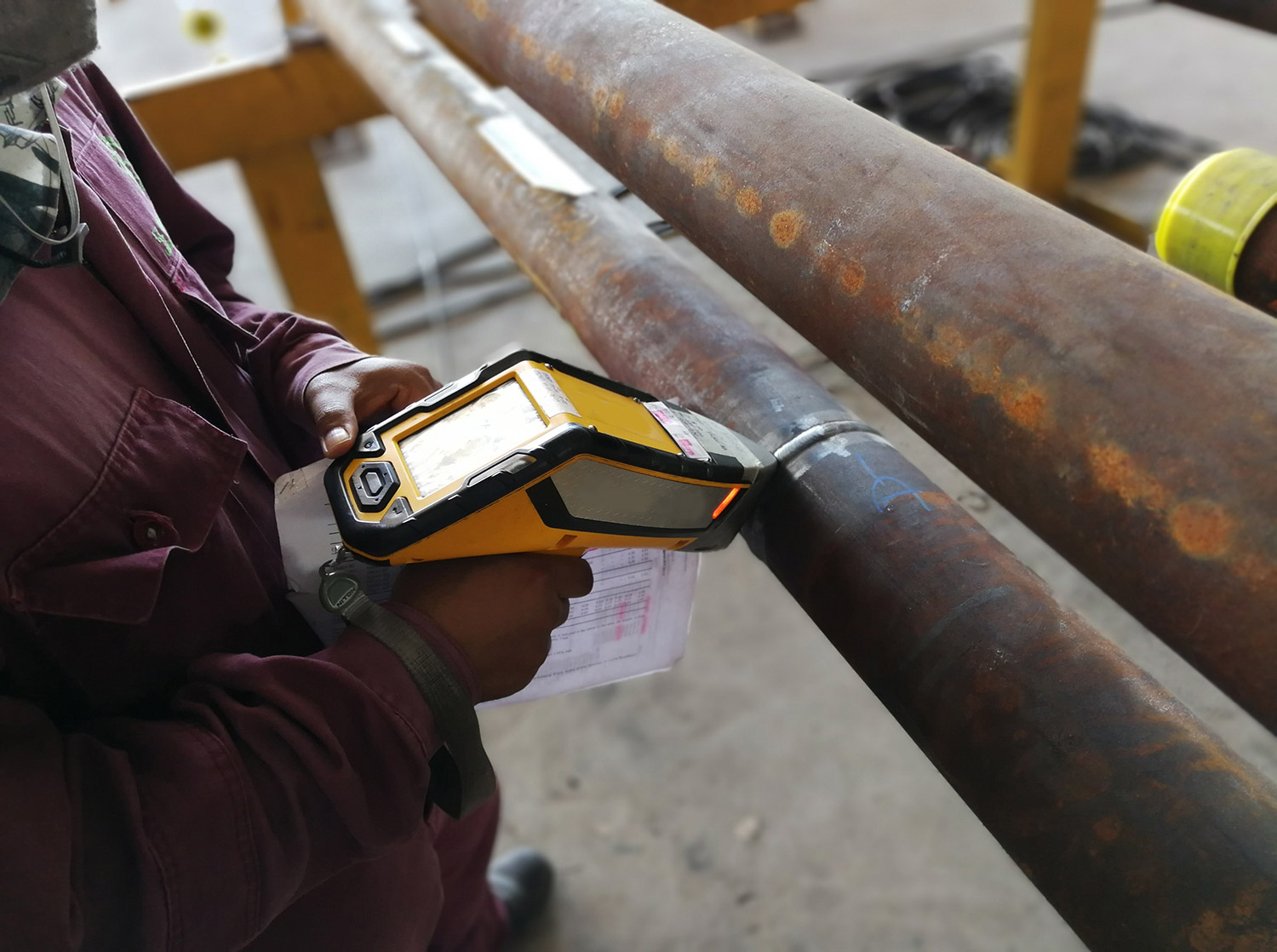
Positive Material Identification (PMI) is extensively used to sort and identify materials and fittings, ensuring their fitness for purpose. This method analyzes the chemical composition of metals and alloys, playing a vital role in production and asset integrity management programs across industries such as oil and gas, power, petrochemical, nuclear, and fabrication.

PMI verifies that a fitting, pipe, or other material possesses the required elements for its specific material specification. Installing incorrect materials can lead to premature or catastrophic failures, making PMI an essential part of NDT and inspection services.
Techniques for Positive Material Identification (PMI)

PMI utilizes multiple analytical methods to accurately determine the chemical composition of metals and alloys, ensuring materials meet required specifications and performance standards.
Read More
  • Optical Emission Spectroscopy (OES) – Analyzes a full range of elements, including carbon and lighter elements, with portable systems for field use
  • X-Ray Fluorescence (XRF) – Common handheld method for rapid, on-site alloy identification, though limited in detecting lighter elements like carbon
  • Laser Induced Breakdown Spectroscopy (LIBS) – Portable OES-based method used for carbon equivalency (CE), featuring integrated argon for enhanced mobility
Read Less

Applications of Positive Material Identification (PMI)

PMI is used across industries to verify material composition, prevent failures, and ensure compliance with specifications and codes.
Read More
  • Verification of chemical composition in metals and alloys
  • Detection of misidentified or incorrect materials
  • Ensuring compliance with ASME Code requirements and customer specifications
  • Confirmation of correct filler materials in welded components
Read Less

Advantages of Positive Material Identification (PMI)

PMI provides fast, reliable material verification using portable technology, supporting efficient inspection and quality assurance processes.
Read More
  • Quick and accurate material analysis
  • Highly portable, handheld inspection technology
Read Less

Limitations of Positive Material Identification (PMI)

While PMI is highly effective for material verification, certain limitations should be considered to ensure accurate results and proper application.
Read More
  • Limited X-ray penetration depth (<0.001”), requiring representative surface selection
  • Surface accessibility and preparation may be required
  • Identification limited to alloys within the analyzer’s library
  • XRF methods cannot detect carbon, sulfur, or phosphorus
  • Requires direct surface contact for accurate measurement

Despite these limitations, PMI remains a reliable solution for ensuring compliance with ASME Code standards and supporting the integrity of piping and vessel fabrication facilities.

Read Less

Need a Customized Inspection Solution?

Our team works closely with you to understand your challenges and deliver the right combination of services to meet your goals.

XCEL
Privacy Overview

This website uses cookies so that we can provide you with the best user experience possible. Cookie information is stored in your browser and performs functions such as recognising you when you return to our website and helping our team to understand which sections of the website you find most interesting and useful.